

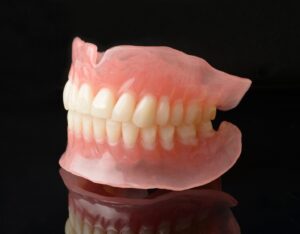
If you need several teeth removed, you may be wondering how long you’ll have to wait before getting dentures. The answer depends on the type of dentures you’re receiving, the number of teeth extracted, your healing process, and your dentist’s treatment plan. In some cases, dentures can be placed immediately after extraction, while other patients may need to wait several weeks or longer.
Immediate Dentures Can Be Placed Right Away
Immediate dentures are designed to be placed on the same day your teeth are extracted. Your dentist takes impressions and plans the denture before your extraction appointment, so the appliance is ready when your teeth are removed.
One benefit of immediate dentures is that you don’t have to spend time without replacement teeth. However, your mouth will change as the extraction sites heal, and your gums and underlying bone can shrink or change shape. As a result, immediate dentures often require adjustments or a reline during the healing process.
Traditional Dentures May Require a Waiting Period
If you’re getting conventional dentures, your dentist may recommend allowing your gums and jawbone to heal before creating your final dentures. Healing can take several weeks, although the timeline varies from person to person.
Waiting allows the tissues to settle into a more stable shape, which can help your dentist create a better-fitting final appliance. Your dentist will monitor your healing and let you know when your mouth is ready for the next step.
What About Implant Dentures?
If you’re considering the most stable solution, or implant-supported “snap-on” dentures, the most common waiting period is 8 to 12 weeks following tooth extraction.
Implant dentures are supported by a post that’s surgically installed through the gums and into your jawbone. That means that most patients are going to need 2 to 3 months for their gums to heal before being tampered with again.
In some cases, an implant can be placed right after tooth removal, but only if the tooth comes out cleanly and enough healthy bone is left to support the implant. Also, there can be no infection at the extraction site.
What Can Affect Your Healing Time?
Several factors can influence how quickly your mouth heals after extraction. The number and location of teeth removed, the complexity of the extractions, your general health, oral hygiene, and whether you develop complications can all affect the timeline.
If you have gum disease or an infection, your dentist may need to address these issues as part of your treatment plan. Following your post-extraction instructions can help support a smoother recovery.
Your Dentures May Need Adjustments
Even after your permanent dentures are placed, some adjustment may be necessary. Your gums and jawbone can continue changing after extractions, particularly during the first several months.
If your dentures feel loose, cause sore spots, or make chewing difficult, don’t simply tolerate the discomfort. Your dentist may be able to adjust or reline the dentures to improve their fit.
There isn’t one waiting period that applies to everyone. During your consultation, ask your dentist which type of denture is appropriate for you, how long your expected healing period will be, and whether you should expect adjustments or a reline.
About the Practice
Cornerstone Dental has many types of denture solutions available to replace your missing teeth. Drs. Jessica Majidian and Emily Nider can outfit you with full, partial, implant, or All-on-4 prostheses, depending on what your needs are. Find out what works best for you by booking a consultation online or calling our Fargo office at (701) 237-3583.